COMMUNITY GEOTHERMAL HEATING
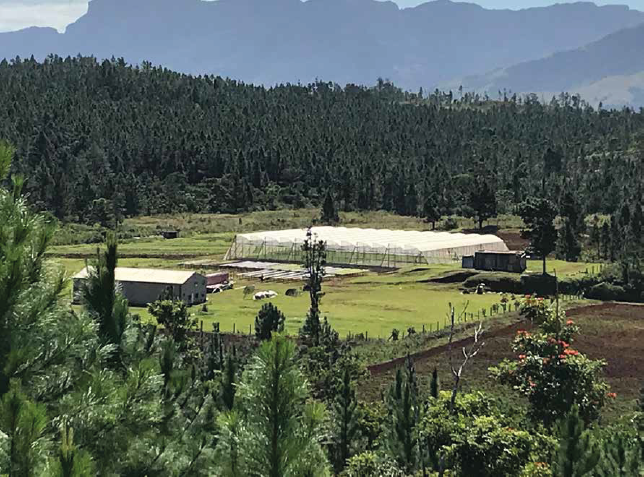
This Community Geothermal Heating & Cooling system which will be the first site of its size in the UK/Scotland.
Community geothermal heating and cooling systems offer several benefits:
1. Energy Efficiency: Geothermal systems are incredibly efficient as they use the earth's natural heat to provide heating and cooling. This can result in significant energy savings.
2. Cost Savings: While the initial installation cost can be high, the long-term savings on energy bills can be substantial. Over time, these systems can pay for themselves.
3. Environmental Impact: Geothermal systems have a lower environmental impact than traditional heating and cooling systems. They produce fewer greenhouse gases and contribute less to global warming.
4. Reliability: Geothermal systems are reliable and require less maintenance than traditional systems. They have fewer moving parts, which can reduce the likelihood of breakdowns.
5. Longevity: Geothermal systems have a long lifespan. The indoor components can last about 25 years, and the ground loop can last 50 years or more.
6. Comfort: Geothermal systems provide consistent temperatures throughout the year, improving comfort levels in homes and buildings.
7. Scalability: These systems can be designed to meet the needs of an entire community, making them a scalable solution for heating and cooling.
8. Independence: By using geothermal energy, communities can reduce their dependence on fossil fuels and become more energy independent.
9. Job Creation: The installation and maintenance of geothermal systems can create local jobs and stimulate economic growth.
10. Property Value: Homes and buildings with geothermal systems often have higher property values due to their energy efficiency and sustainability features.
HYDROPONICS & AEROPONICS
AEROPONICS
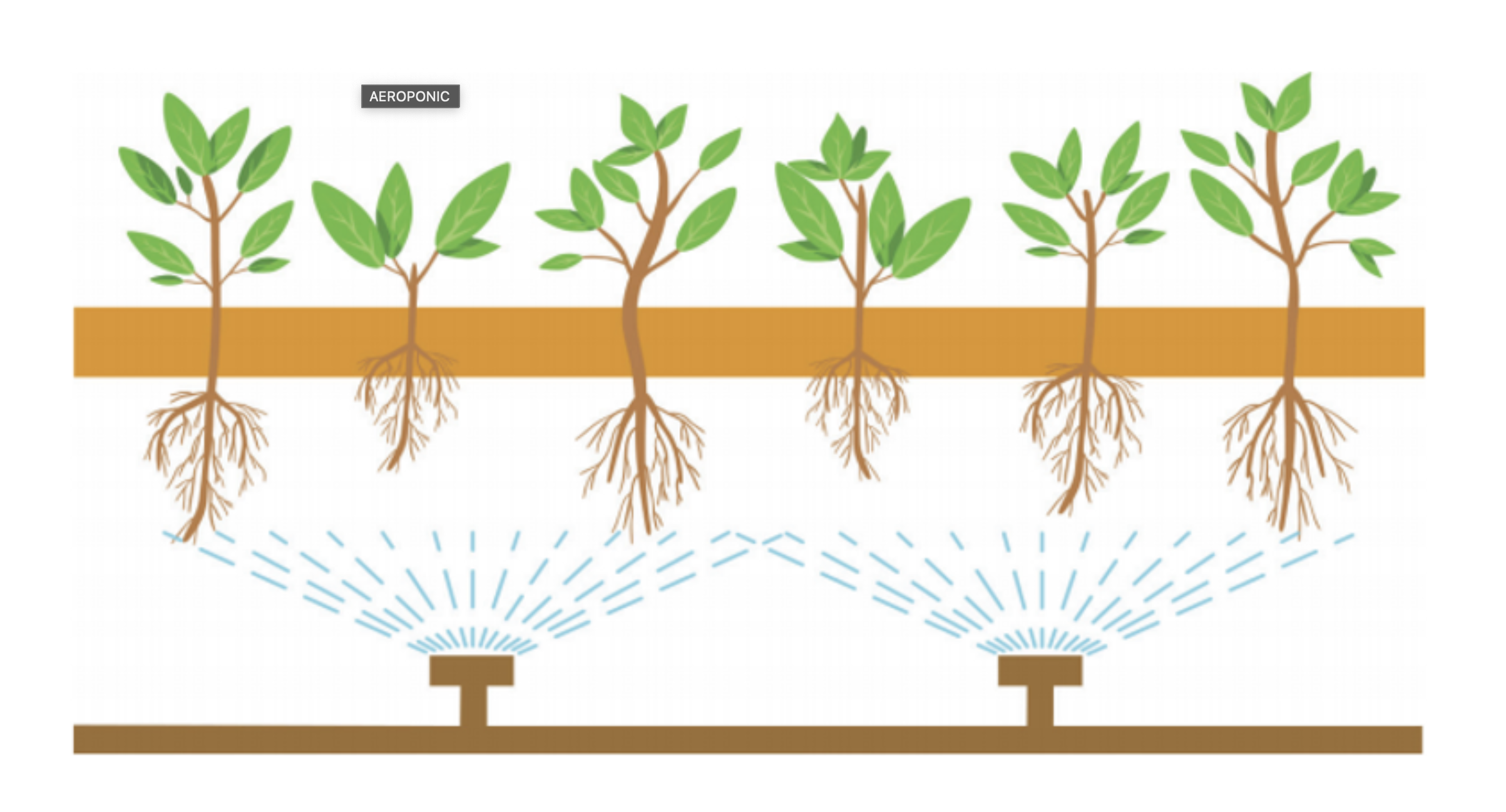
Aeroponics is a method of growing plants without soil, where the plant roots are suspended in air and misted with nutrient-rich water. This method has several benefits:
1. **Water and Nutrient Efficiency**: Aeroponics uses up to 98% less water and significantly less nutrient solution than traditional soil-based or hydroponic systems. This is because the misting process allows for the nutrients to be directly absorbed by the roots, reducing waste.
2. **Space Efficiency**: Aeroponic systems can be stacked vertically, allowing for more plants to be grown in a smaller space. This makes it an ideal method for urban farming or indoor gardening.
3. **Faster Growth**: Plants grown aeroponically often grow faster and produce more yield. This is because the plants do not have to expend energy on extensive root systems to search for water and nutrients, as they are directly provided to them.
4. **Reduced Disease and Pests**: Since there is no soil, the risks of soil-borne diseases and pests are significantly reduced. This can result in healthier plants and higher yields.
5. **Environmentally Friendly**: Aeroponics is a sustainable method of farming as it uses less water and nutrients, produces less waste, and does not require the use of pesticides or herbicides.
6. **Ease of Harvesting**: Since the plants are not rooted in soil, harvesting is often easier and cleaner.
7. **Plant Health Monitoring**: In an aeroponic system, it's easier to monitor plant health as the roots are visible and any disease or stress can be detected early.
Remember, while aeroponics has many benefits, it also requires careful monitoring and management to ensure plants receive the right amount of nutrients and water.
HYDROPONICS
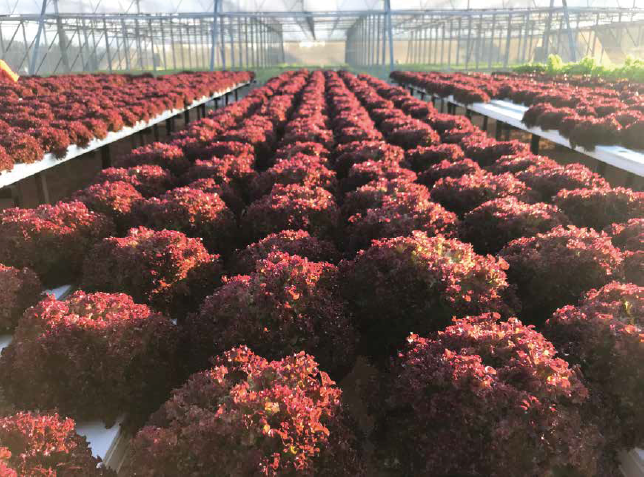
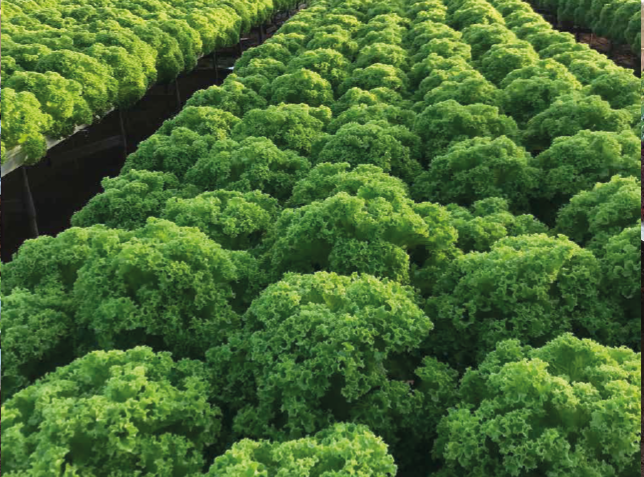
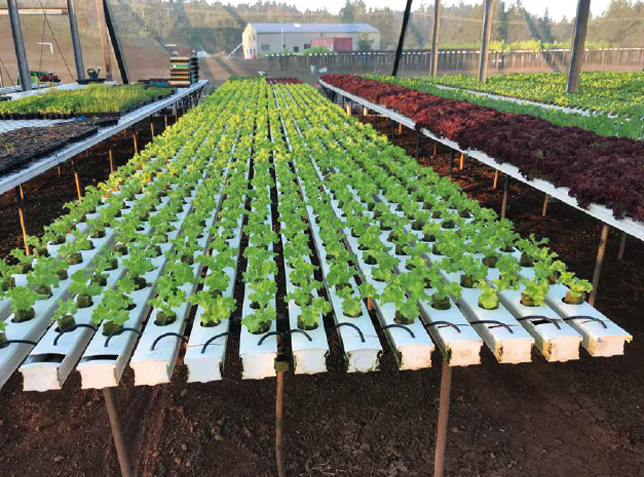
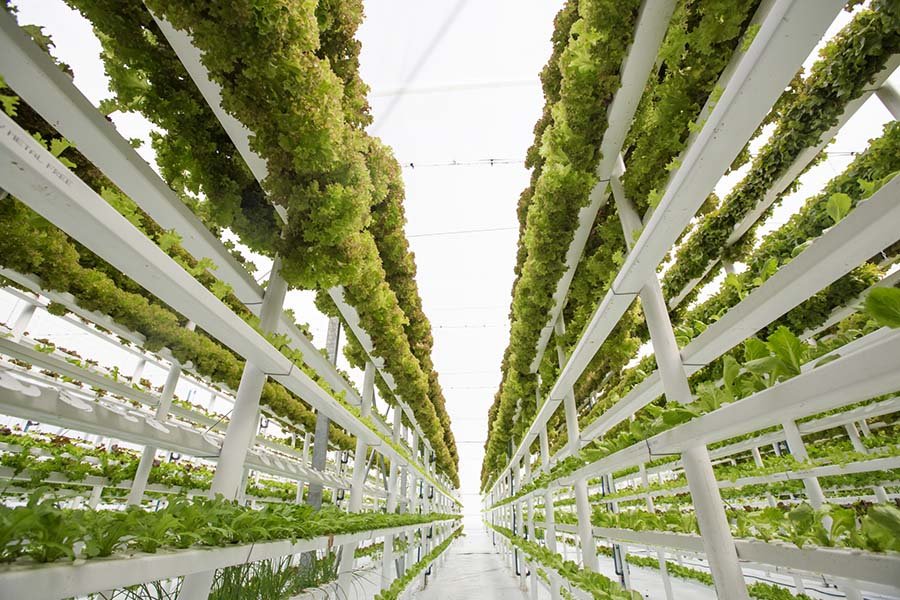
Hydroponics is a method of growing plants without soil, where the plants are grown in a nutrient-rich water solution. Here are some key benefits of using hydroponics to grow plants:
1. Efficient use of resources: Hydroponics uses up to 90% less water compared to traditional soil-based farming because water is recycled in a closed system. This makes it an environmentally friendly option, particularly in regions facing water scarcity.
2. Faster growth and higher yields: By providing plants with an optimized nutrient solution, hydroponics enables faster and healthier growth. This results in higher crop yields compared to traditional farming methods.
3. Year-round cultivation: Hydroponics allows for controlled indoor cultivation, which means you can grow crops throughout the year regardless of the external climate conditions. This extends the growing season and guarantees a constant supply of fresh produce.
4. Space efficiency: Hydroponics systems are typically designed vertically, allowing for maximized use of vertical space. This makes it suitable for urban environments and areas with limited land availability.
5. Reduced need for pesticides: Since hydroponic systems are enclosed, pests and diseases are generally less prevalent. This reduces the need for pesticides, making hydroponics a more sustainable and potentially healthier alternative.
6. Flexibility in plant selection: Hydroponics offers the possibility to grow a wide variety of plants, including leafy greens, herbs, vegetables, and even some fruits. It allows for experimentation and cultivation of crops that may not thrive in traditional agricultural settings.
Overall, hydroponics offers a highly efficient, sustainable, and flexible way to grow crops while conserving resources and maximising yields.
VERTICAL FARMING
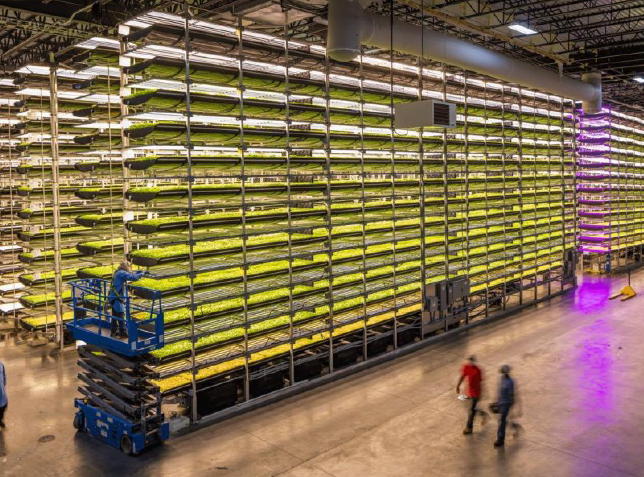
Vertical farming offers several key benefits:
1. Efficient use of space: Vertical farming maximises land use by stacking plants vertically, enabling multiple tiers of crops to be grown in a smaller footprint.
2. Increased crop yield: With optimal control over environmental factors such as light, temperature, humidity, and nutrient levels, vertical farming can potentially achieve higher crop yields compared to traditional farming methods.
3. Year-round production: Vertical farming utilises controlled indoor environments, allowing for year-round crop production independent of seasonal changes or weather conditions.
4. Reduced resource consumption: By employing techniques such as hydroponics or aeroponics, vertical farming can significantly reduce water usage and eliminate the need for chemical pesticides. Additionally, it can minimise land and energy requirements.
5. Locally sourced produce: Vertical farms can be established in urban areas, bringing food production closer to consumers and reducing transportation costs, carbon emissions, and dependence on long-distance shipping.
6. Food security and sustainability: Vertical farming can contribute to enhancing food security by providing a consistent supply of fresh produce, reducing reliance on imports, and reducing the vulnerability of crops to climate changes or natural disasters.
7. Innovation and research: Vertical farming provides opportunities for technological advancement and research into sustainable farming practices, automation, and optimisation of crop growth, contributing to the development of future agricultural practices.
These benefits make vertical farming an attractive solution for addressing the challenges of limited arable land, population growth, urbanisation, and environmental sustainability.